


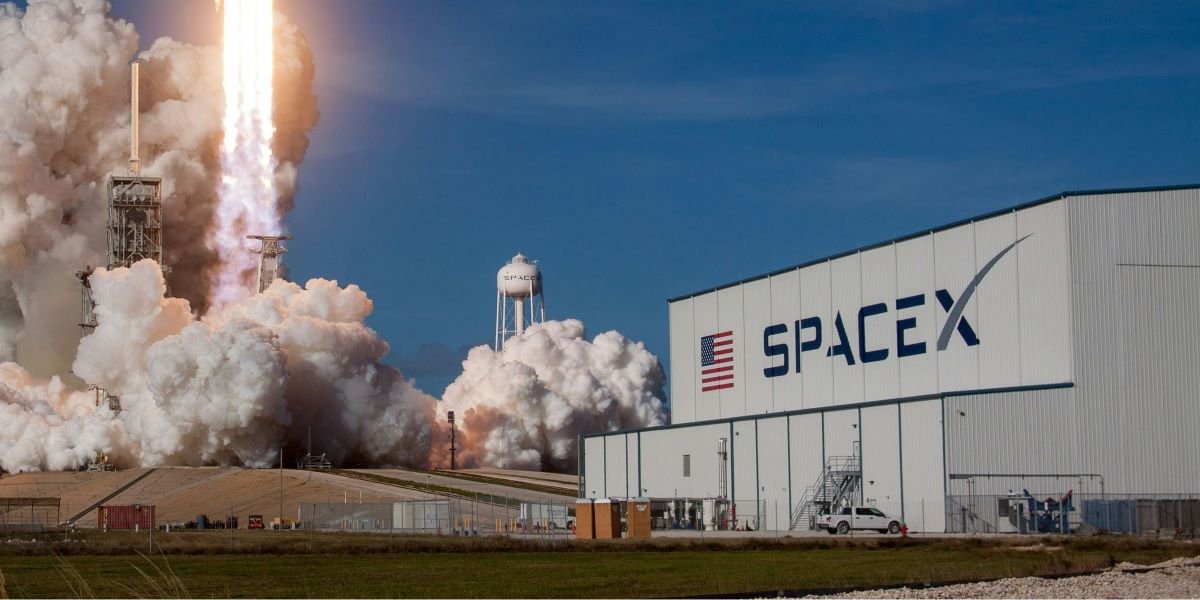
Elon Musk’s SpaceX took the long-anticipated step toward going public on May 20, filing its S-1 registration statement with the U.S. Securities and Exchange Commission and setting the stage for what could be the largest initial public offering in market history. The filing — submitted under the company’s formal name, Space Exploration Technologies Corp. — confirms a Nasdaq listing under the ticker SPCX, with reports pointing to a June public debut at a targeted valuation of $1.5 trillion or higher.
What the Filing Confirmed
The S-1 is the first comprehensive public look at SpaceX’s financials in the company’s 24-year history. According to the filing and reporting from Bloomberg, Fortune, and TechCrunch, SpaceX’s 2025 revenue reached $18.7 billion, up from roughly $14 billion in 2024 — growth driven primarily by the continued expansion of Starlink satellite internet alongside its reusable rocket launch business. The filing also disclosed billions in losses, a detail Fortune noted in its coverage of the prospectus, reflecting the capital intensity of Starship development and Starlink’s ongoing satellite deployment.
The filing additionally revealed that SpaceX holds 18,712 bitcoin with a fair value of $1.29 billion as of March 31, 2026 — per CoinDesk. That makes SpaceX one of the most significant corporate holders of bitcoin among non-crypto-native companies, a disclosure that could affect how index-tracking and institutional investors model the company’s balance sheet post-IPO.
The IPO is expected to begin formal marketing around June 4, price as early as June 11, and begin trading as soon as June 12, per earlier Reuters-linked reporting. The targeted fundraise of up to $75 billion would dwarf Saudi Aramco’s $29 billion offering from December 2019, which currently holds the all-time record by proceeds. At a $1.5 trillion valuation — with some sources citing as high as $1.75 trillion — SpaceX would immediately rank among the 10 most valuable publicly traded companies in the world.
Voting Structure: Musk Keeps Control
For wealth-tracking readers parsing what the IPO actually means for shareholder rights, the dual-class voting structure is the headline. According to the SEC filing and reporting from investingLive, Class A shares will carry one vote each, while Class B shares carry 10 votes each. Musk holds 12.3% of Class A shares and 93.6% of Class B shares, giving him 85.1% of total voting power going into the IPO.
That number will decline post-offering as new Class A shares are sold to the public, but TechCrunch reported it’s expected to stay above 50% — keeping SpaceX classified as a “controlled company” under Nasdaq’s corporate governance rules. That designation exempts the company from requirements to maintain a majority-independent board of directors. Musk will continue to serve as CEO, Chief Technical Officer, and Chairman, with the power to elect, remove, or fill vacancies among Class B directors.
Bloomberg additionally reported the filing includes a performance award package that could grant Musk as many as 1 billion additional shares if specific milestones are hit — a structure that echoes (and in scale, exceeds) the controversial 2018 Tesla compensation package.
For Class A retail investors, the trade-off is clear: meaningful exposure to the space and satellite infrastructure economy, but minimal influence on corporate decision-making and no expectation of dividends “in the foreseeable future,” per the filing.
What It Means for Musk’s Net Worth
The IPO has direct implications for the world’s wealth rankings. As of May 20, 2026, Bloomberg’s Billionaires Index puts Musk’s net worth at $667 billion, while Forbes’ 2026 World’s Billionaires List puts the figure at $839 billion at peak. A successful $1.5 trillion+ SpaceX listing would significantly increase his liquid and on-paper wealth and, according to NBC News, “could make CEO Elon Musk the world’s first trillionaire.”
If SpaceX trades at or above its targeted IPO valuation, Musk would also become the first person to lead two separate publicly traded trillion-dollar companies — joining Tesla, which crossed that mark in earlier cycles. For NetWorth.us readers tracking the trajectory toward the first 13-figure fortune, the SpaceX listing is the single most important data point on the calendar.
Why This Matters for U.S. Investors
Until now, SpaceX has been accessible to ordinary investors only indirectly — through tender offers limited to accredited buyers, secondary share marketplaces, or proxy exposure via certain ETFs holding pre-IPO stakes. A public Nasdaq listing under SPCX would change that overnight, opening direct retail access to the company widely considered the leader in commercial spaceflight, reusable rocket launches, and low-earth-orbit satellite internet.
The IPO also lands in a market environment where AI-related capital expenditure is driving record equity valuations. Nvidia, which reported Q1 fiscal 2027 revenue of $81.6 billion on the same day SpaceX filed its S-1, has set the bar for what investors will pay for AI infrastructure exposure. SpaceX is positioning itself in adjacent infrastructure — satellite networks, launch capacity, and, per the S-1, AI-related investments — that institutional buyers have struggled to access at scale.
The Bottom Line for Wealth Builders
The SpaceX S-1 is the financial document of the year for U.S. retail investors. The voting structure means Class A buyers won’t shape company direction, but the underlying business — $18.7 billion in 2025 revenue, dominance in two infrastructure-defining markets, and a founder positioned to become the first trillionaire — is the kind of asset that reshapes portfolio construction across the wealth spectrum. Readers tracking the IPO calendar over the next four weeks should focus on three milestones: the marketing period kicking off in early June, formal pricing around June 11, and the first day of trading expected as soon as June 12.
Disclaimer: This article is for informational purposes only and does not constitute financial, investment, or legal advice. Information is based on publicly available sources, including SEC filings and reporting from named outlets, as of the publication date. IPO valuations, timing, and pricing details are subject to change. Net worth figures cited reflect third-party estimates and fluctuate with market conditions. Readers should consult a licensed financial advisor before making any investment decisions.