

Founder, BirthWise Doula Services · United Nations Representative, Africana Women Working Group (AWWG) at ECOSOC · Director of Advocacy, DONA International.
Through nearly three decades of advocacy, education, maternal health leadership, and humanitarian work, Toni Curtis is building a new vision of women’s healthcare, one rooted in knowledge, dignity, prevention, and whole-person wellbeing.
When a Search for Answers Became a Life’s Purpose
Some professional journeys begin with a carefully planned career path. Others begin with a deeply personal question that refuses to disappear.
For Toni Curtis, that question emerged through her own experience with infertility, pregnancy loss, hormonal challenges, and the frustration of dealing with healthcare systems that did not always have the answers she needed. What began as a personal search for understanding became a nearly three-decade commitment to helping women get better information, better support, and more comprehensive care.
Today, Curtis is an international humanitarian, women’s health strategist, educator, author, maternal health advocate, and workforce development leader. She is the Founder and Director of BirthWise Doula Services, a United Nations Representative through the Africana Women Working Group (AWWG), a consultative body to the UN Economic and Social Council (ECOSOC), and Director of Advocacy for DONA International.
Titles alone do not explain her journey.
At the heart of her work is a simple belief that women should not have to move through major stages of their lives without understanding what is happening in their own bodies, or without the support they deserve.
That belief has shaped everything she has built.
A Personal Journey Into Women’s Health
Curtis’s path into women’s health was shaped by experiences that could easily have become barriers. Instead, they became catalysts.
Her own struggles with infertility and pregnancy loss led her to look beyond conventional answers and study the many factors that influence women’s health: physiology, anthropology, nutrition, childbirth education, lactation, movement, bodywork, mental health, and traditional healing practices.
The more she studied, the more she recognized that women’s health could not be understood through a single discipline.
Pregnancy was more than a medical event, and recovery extended far beyond the physical. Emotional wellbeing was deeply linked to hormonal health, while recovery was heavily influenced by nutrition. Movement supported the body throughout pregnancy and postpartum life, and cultural perspectives profoundly shaped how women approached healthcare and sought support.
This interconnected view became the foundation of her professional philosophy.
Her journey also taught her that knowledge becomes most useful when it turns into practical support. That realization led her to work directly with families, and eventually to found BirthWise Doula Services.
Building BirthWise Around Evidence, Education, and Whole-Person Care
Through BirthWise, Curtis has supported more than 1,000 births over nearly three decades in the field, building a model of care that goes beyond the traditional boundaries of childbirth support.
Her approach centers on education, informed decision-making, compassionate guidance, and attention to the individual needs of every woman. For Curtis, supporting a woman does not mean making decisions for her. It means giving her the knowledge and confidence to participate fully in decisions about her own health.
That model has drawn interest well beyond her own practice. AmeriHealth Caritas North Carolina built a two-year doula pilot on her methodology, serving a publicly insured population that included high-risk pregnancies and inductions, and the plan is now expanding the program statewide as a value-added service for members.
Work at that scale has moved Curtis from the labor room into policy conversations. Payers, health systems, and state agencies weighing how to structure doula benefits look to practitioners who can describe exactly how their care is delivered, and Curtis has spent years putting that structure in place.
Her philosophy has also led her to develop The Lifespan Birth Method™, an interdisciplinary framework connecting physiology, nutrition, endocrine health, nervous system regulation, movement, and culturally responsive care across a woman’s life. The method works across four arms, Clinical Care, Body & Breath Work, Nutrition & Fertility, and Policy & Advocacy, and none is delivered in isolation.
Within the Policy & Advocacy arm, Curtis is also building a workforce development framework designed to prepare professionals across doula care, lactation, infant feeding, childbirth education, nutrition, bodywork, and community health to work from a shared, physiology-first standard.
Her objective is bigger than training individual practitioners. She is building an ecosystem in which professionals from different disciplines can work together and understand a woman as a whole person, not a collection of separate health concerns.
The Knowledge Others Questioned Became Her Strength
Innovation often begins where conventional thinking ends.
Throughout Curtis’s career, her range of interests was not always understood. Her willingness to study subjects that seemed unrelated led one supervisor to jokingly call her the “Queen of Useless Knowledge.”
What could have been discouraging became an important lesson: the knowledge was not useless. It simply had not yet been connected.
Physiology could inform childbirth education. Nutrition could influence postpartum recovery. Movement and bodywork could support physical wellbeing. Mental health could not be separated from the experience of pregnancy and motherhood. Traditional healing practices could offer perspectives that complemented clinical care.
Curtis learned to connect these pieces. That ability to see relationships between disciplines became one of her greatest professional strengths.
Her determination was tested during her academic path too. While completing her pre-nursing studies, she earned her Certified Nursing Assistant credential while caring for a newborn. There were moments she questioned whether she belonged in the professional spaces she was entering.
She continued anyway.
That persistence now shapes how she encourages others to pursue knowledge even when their path does not fit conventional expectations.
From Supporting Families to Changing Systems
As her experience grew, Curtis realized that helping individual families was only part of the solution. For women to see meaningful change, the systems around them needed to evolve too.
That understanding expanded her work into professional education, advocacy, humanitarian service, public speaking, and workforce development.
Her role as Director of Advocacy for DONA International lets her contribute to the broader conversation on recognizing and developing maternal health professionals. As a United Nations Representative through the Africana Women Working Group (AWWG) at ECOSOC, she brings that experience into international discussions on women, communities, health, and social development.
She also lectures at universities, where she pairs academic theory with practical experience.
For Curtis, education is not about transferring information. It is about developing professionals who think critically, collaborate across disciplines, and understand the human realities behind the work they do.
That shift, from individual care toward systems thinking, has become one of the defining developments of her career.
Recognition Reflecting a Broader Impact
Curtis’s contributions have earned recognition across healthcare, education, and women’s leadership. She is a Forttuna Global 100 honoree and was appointed in 2026 to the Global Advisory Board of the Forttuna Health and Wellness Council. She has been inducted into the Marquis Who’s Who Biographical Registry, featured in Millennium Magazine, and recognized by Expertise.com.
These recognitions mark real milestones, but they are not the measure Curtis uses for her own success. For her, the greater achievement is watching knowledge move from one person to the next: from educator to practitioner, practitioner to family, family to community. That is how lasting change happens.
What Comes Next for Women’s Health Care
Curtis is now looking beyond birth itself. Her vision spans the full lifespan of women’s health, recognizing that needs evolve from menstruation through pregnancy, postpartum recovery, menopause, and every stage in between.
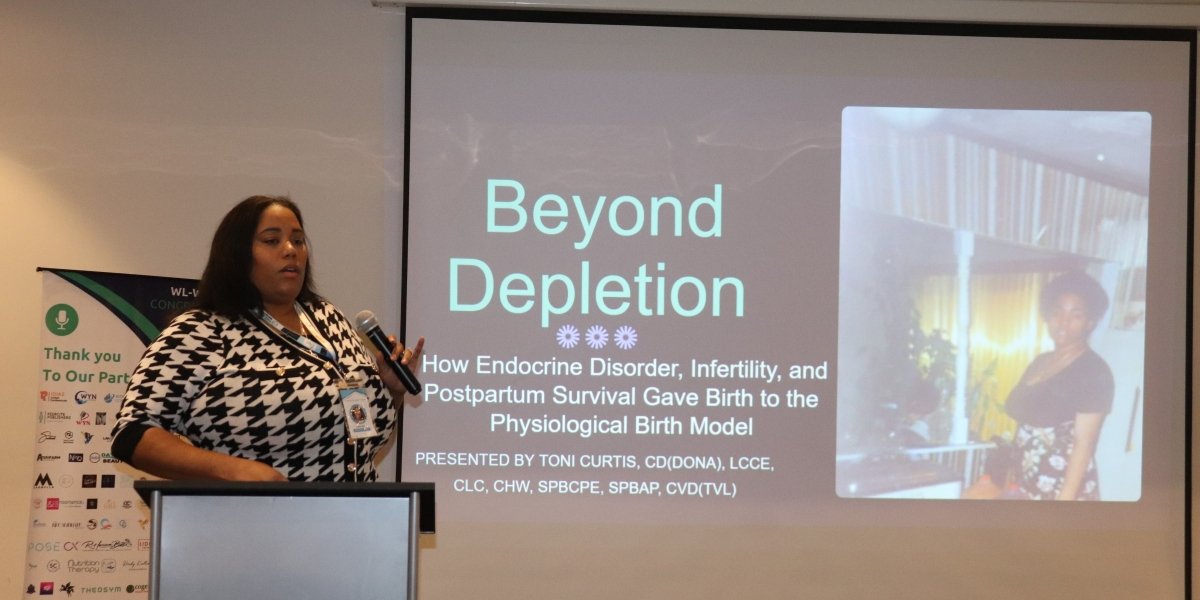
Her book, Beyond Depletion: The Nutritional Therapist’s Guide to Postpartum Healing, reflects that philosophy, focusing on what it takes to rebuild a woman’s physical and emotional resources after birth.
She continues to expand The Lifespan Birth Method™ and grow Embrace & Evolve: The Reinvention of Women’s Health through conferences, education, and professional collaboration.
These initiatives mark an evolution in her work. She is no longer only responding to gaps in women’s healthcare. She is helping design the pathways that close them.
Her focus on workforce development matters here. Real change in healthcare needs good ideas and well-trained people who can put those ideas into practice. By building educational frameworks and professional pathways, Curtis is investing in the people who will carry the work forward.
A Legacy Measured in Knowledge Passed Forward
Toni Curtis’s story is about refusing to let adversity have the final word.
The woman who once searched for answers after infertility and pregnancy loss turned that search into a lifelong mission to help other women understand, protect, and advocate for their own health.
The student whose wide-ranging curiosity was once dismissed as “useless knowledge” turned that same curiosity into interdisciplinary frameworks connecting physiology, nutrition, movement, mental wellbeing, education, and traditional healing.
And the practitioner who began by supporting individual families has grown into an educator, author, humanitarian, advocate, workforce builder, and international voice for women’s health.
Her story shows that meaningful change does not always start with a major institution or a new technology. Sometimes it starts with a person asking a hard question and refusing to stop until she finds a better answer.
Through BirthWise, her frameworks, her advocacy, her writing, and her international work, Curtis continues to build toward a future where women are informed rather than overlooked, supported rather than isolated, and equipped to take an active role in their own healthcare.
Her legacy will extend well beyond the births she has supported or the honors beside her name. It will live in the professionals she has trained, the families she has strengthened, the women she has helped find their own voice, and the systems she continues to challenge and improve.
For Toni Curtis, healing is knowledge passed forward, care turned into action, and, ultimately, a legacy built one woman at a time. For more information, visit BirthWise Doula Services.