


People are accustomed to measuring what can be counted. Career milestones, professional recognition, financial accomplishments, and visible achievements can all provide a sense of progress. These measures have their place, but they can also create an important question: Can external achievement fully define a person’s worth?
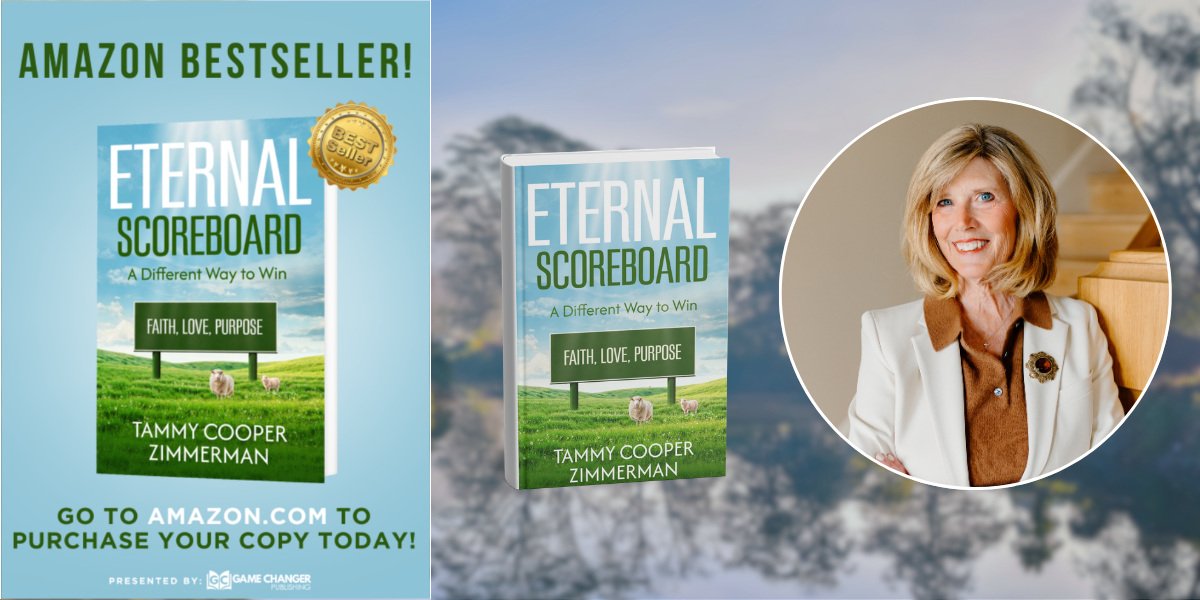
For Tammy Cooper Zimmerman, the answer begins with looking beyond the conventional scoreboard. As the published author of the book Eternal Scoreboard, Zimmerman encourages readers to reconsider how they measure success and to examine the role of faith, purpose, and lasting impact in determining what truly matters.
When Achievement Becomes the Measure
Achievement can be motivating. Reaching a goal provides evidence that effort produced a result. Recognition can affirm that work has made an impression. Professional progress can create opportunities for growth and influence.
The difficulty begins when these outcomes become the primary standards by which people evaluate themselves.
A person can continue reaching milestones while becoming increasingly focused on the next one. A new accomplishment replaces the previous accomplishment. Recognition becomes something to pursue again. Success can become a scoreboard that always requires another point.
Zimmerman’s perspective challenges that cycle by encouraging people to reconsider what they are ultimately trying to measure.
The question is not whether achievement matters. It is whether achievement should determine the full value of a person’s life.
Tammy Cooper Zimmerman on a Different Scoreboard
The concept behind Eternal Scoreboard begins with the idea that the most important measures of life may not always be the easiest to see.
Zimmerman draws from stories she has lived and experiences she has observed to encourage readers to look beyond achievement and recognition. Her perspective places greater emphasis on purpose, faith, and the kind of impact a person creates.
This broader view can change how people interpret both success and disappointment.
A professional accomplishment may be meaningful without becoming the foundation of personal identity. A setback may be painful without becoming proof that a person’s efforts lack value. And recognition may be appreciated without becoming the ultimate measure of whether a life is successful.
The distinction is important because external outcomes can change. Titles change. Circumstances change. Goals are reached and replaced. Recognition can be temporary.
A deeper sense of purpose provides a different foundation.
Faith Changes the Perspective
Faith in God is central to Zimmerman’s understanding of that foundation.
She encourages readers to develop or deepen their faith and to approach life with an eternal perspective. For Zimmerman, this perspective means that immediate circumstances and visible achievements do not provide the complete picture of what makes a life meaningful.
That can influence how a person evaluates both success and failure.
Instead of measuring every experience only by its immediate result, an eternal perspective creates room to consider purpose, character, faith, and impact. The focus shifts from simply asking what was achieved to considering what the experience is contributing to the person and the life being built.
This perspective is particularly relevant in a culture where visible achievement can easily become tied to identity. When success is defined primarily by external outcomes, an unexpected setback can feel like a judgment on personal worth. When success is understood more broadly, a difficult outcome can be placed within a larger perspective.
What Kind of Impact Matters?
A broader definition of worth also changes the way impact is considered.
Impact does not have to be limited to professional accomplishments or public recognition. It can be reflected in how people influence others, how they respond to difficult circumstances, and whether their lives remain connected to the values and purposes they consider important.
For Zimmerman, faith provides an essential part of that evaluation.
The Eternal Scoreboard is therefore less about rejecting conventional measures of success than about putting them into perspective. Achievement can still matter. Recognition can still be meaningful. But neither has to serve as the final measure.
That distinction can give people permission to pursue meaningful goals without allowing those goals to determine their entire sense of worth.
Rethinking What Counts as Success
The measures people use to evaluate their lives influence the way they pursue them. If achievement is the only scoreboard, the next milestone can always become the next definition of success.
Zimmerman’s message offers another possibility: to live with greater faith, purpose, and confidence while considering the impact that extends beyond immediate accomplishments.
Her book, Eternal Scoreboard, develops this perspective through her own experiences and the lessons she has drawn from them. It encourages readers to reconsider what they are measuring, why they are measuring it, and whether their definition of success reflects what they ultimately value.
Personal achievement can tell part of a story. It does not necessarily tell the whole story.
For those willing to examine the scoreboard they have been using, redefining success may begin not with achieving something new, but with deciding what is truly worth counting.
Learn More and Connect with Tammy Cooper Zimmerman
Website: Eternal Scoreboard
Book: Eternal Scoreboard
Instagram: Tammy Zimmerman Author
Facebook: Tammy Zimmerman
LinkedIn: Tammy Zimmerman