


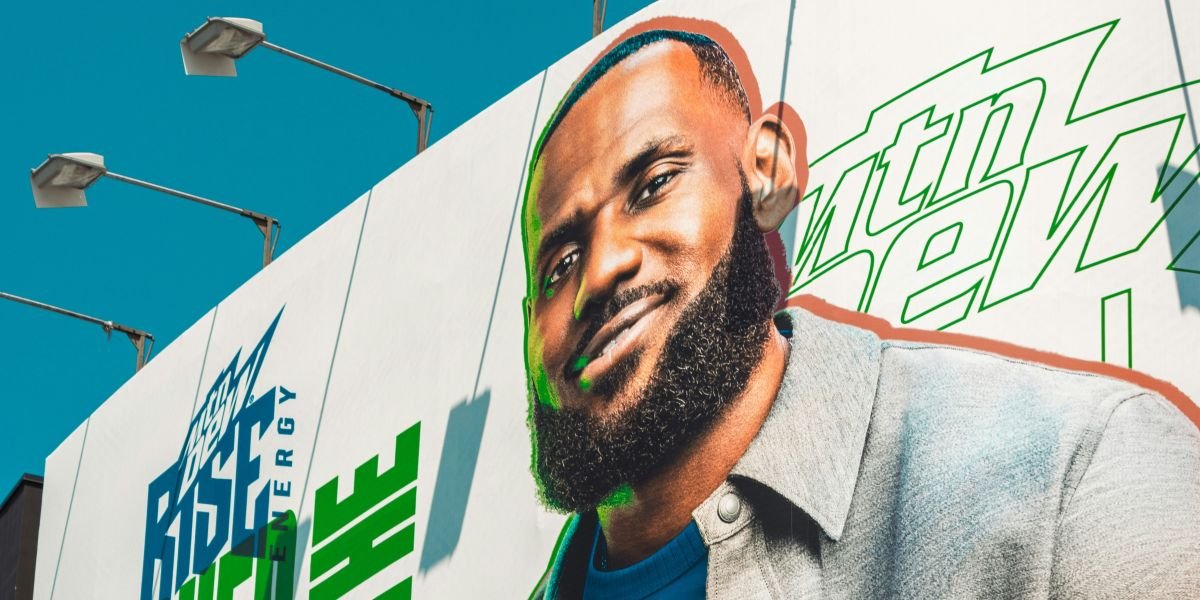
LeBron James, at 41 and still drawing a $52.6 million Lakers salary, has built the most studied wealth architecture in professional sports history. A lifetime Nike deal worth more than $1 billion. A compounding equity stake in Fenway Sports Group now valued at roughly $90 million on a $6.5 million original investment. A media company valued at $725 million with institutional backers including Nike, Epic Games, and RedBird Capital. A Beats by Dre stake that converted into $30 million cash when Apple bought the company. A Blaze Pizza position that returned 30x on a sub-$1 million entry. And more than $580 million in career NBA salary that was never the point — it was always the foundation. This is the blueprint JPMorgan’s new Athlete Council is now trying to replicate at scale.
There is a before-and-after moment in how professional athletes think about wealth, and LeBron James is where that line was drawn. Before James, athletes signed endorsement deals, collected fees, and built net worth the way any high-income professional builds net worth: by saving a significant portion of their income and investing conservatively. After James, the framework shifted entirely. Athletes started demanding equity. They started building companies. They stopped thinking about the career as the wealth event and started treating it as the platform from which wealth could be built separately.
The result, in James’ case, is a fortune Forbes estimates at $1.2 billion to $1.3 billion as of 2026 — making him the first active NBA player in history to achieve billionaire status, which he crossed in 2022. The key word is “active.” James didn’t wait for retirement to build his empire. He built it in parallel with his playing career, compounding for years while he was still collecting a salary. That parallel construction is the structural advantage that separates his wealth trajectory from virtually every athlete who came before him.
The Foundation: What $580 Million in NBA Salary Actually Represents
Career NBA earnings are where most athlete wealth profiles begin and end. For LeBron James, they are the foundation — critical, substantial, and ultimately not the story.
LeBron James has earned more from NBA contracts than any player in league history. His career salary trajectory reflects both his dominance and the rising NBA salary cap. His current two-year, $101.3 million contract with the Lakers runs through 2026. At $52.6 million for the 2025–26 season, James remains among the highest-paid players in the NBA at age 41.
Total career NBA earnings across his time with the Cleveland Cavaliers, Miami Heat, and return to Cleveland before his Los Angeles Lakers tenure: career NBA earnings before taxes exceed $580 million.
That number is genuinely extraordinary. It is also, in the context of his total net worth, roughly half the picture. The other half — the more instructive half — is everything James and his business partner Maverick Carter built that had nothing to do with what happened on the basketball court.
The Nike Lifetime Deal: The Architecture of a Billion-Dollar Partnership
The single biggest wealth-building instrument in James’ portfolio is a contract that most athletes never approach the vicinity of: his lifetime deal with Nike, signed in December 2015.
Nike has signed LeBron James to a lifetime deal in what one source familiar with the negotiations said is the largest single-athlete guarantee in company history. It is believed to be the first lifetime deal in Nike’s 44-year history at the time of signing.
The structure is what makes it exceptional. LeBron James signed a lifetime deal with Nike in 2015 reportedly worth over $1 billion. The deal pays approximately $32 million annually and includes equity participation, making it one of the largest endorsement contracts in sports history.
The equity participation component is the clause that most reporting glosses over. James is not merely a paid spokesperson for Nike. He participates in Nike’s broader business performance, meaning his returns compound with the company’s growth rather than being capped at a fixed annual fee. James’ business partner Maverick Carter all but confirmed the deal surpasses $1 billion in total value, telling interviewers that the “estimated $400–500 million value is significantly low.”
The partnership began in 2003 when an 18-year-old James — turning down a larger guaranteed offer from Reebok — signed a seven-year, $90 million rookie deal with Nike. He had understood from the beginning that Nike represented something Reebok’s money could not: alignment with a brand he associated with greatness. That instinct returned billions. LeBron James’ Nike business has been consistent even when things haven’t gone smoothly. Through championship droughts, team departures, and periods of controversy, the Nike business compounded regardless.
Fenway Sports Group: The $6.5 Million Investment That Became $90 Million
In 2011, LeBron James received an offer from Fenway Sports Group — the ownership group behind the Boston Red Sox and Liverpool FC — that was structured as a marketing agreement. He would help promote the FSG brand internationally in exchange for compensation. Most athletes would have taken the fee. James, guided by Carter, asked for equity instead.
The original investment was approximately $6.5 million for a small ownership position in FSG. LeBron’s portfolio in the said company has multiplied 22 times since he first joined the group.
The mechanics evolved over time. In July 2025, CNBC published a list of the most valuable sports empires in the world, and at No. 4 on the list is FSG, with a value of $14.19 billion. FSG’s holdings include the Red Sox, Penguins, and the NESN sports network. It also owns minority stakes in NASCAR’s RFK Racing and PGA Tour Enterprises.
LeBron’s stake has appreciated to roughly $90 million. He almost said no to the deal. That decision not to — to take equity instead of a larger upfront payment — illustrates the philosophy that separates billionaire athletes from merely wealthy ones.
The Fenway deal also made James and Carter the first Black partners of FSG, a dimension of the story that matters beyond the financial returns. The move established a repeatable framework: convert marketing and promotional value into equity rather than fees, then hold.
Beats by Dre: The First Major Exit
Before the Nike lifetime deal. Before SpringHill. Before Fenway reached its current valuation. LeBron James demonstrated the equity-over-fees model with Beats Electronics — and the payout announced the arrival of a new era in athlete finance.
James received a small stake in Beats by Dre in exchange for promoting the headphones in the brand’s early growth years. When Apple purchased Beats Electronics for $3 billion in 2014, James received what was deemed the largest equity cash payout at the time across sports thanks to a sponsorship deal with Beats By Dre. He reportedly pocketed $30 million in cash and stock when Apple purchased Beats Electronics for $3 billion in 2014.
The structural insight of the Beats outcome was immediate and industry-wide: if James had taken a traditional endorsement fee instead of equity, the Apple acquisition would have meant nothing to his balance sheet. Because he had equity, Apple’s $3 billion purchase converted directly into $30 million for an athlete who had simply agreed to wear headphones in public.
SpringHill Company: The Media Enterprise Built Not Around LeBron but With Him
The SpringHill Company is the most complex and arguably most strategically significant component of the James wealth portfolio. SpringHill Company is an entertainment development and production company founded in 2020 by LeBron James and Maverick Carter. Its board of directors includes Serena Williams. The company unites three earlier companies founded by James and Carter: SpringHill Entertainment, an entertainment production company founded in 2007, the Robot Company, an integrated marketing agency and brand and culture consultancy, and Uninterrupted, founded in 2015 with the aim to empower athletes by providing a platform that allows them to share their stories.
The institutional validation came in 2021: The SpringHill Company announced that it sold a “significant minority stake” to an investor group at a $725 million valuation. The lead investor was RedBird Capital Partners, which got to know James and Carter via their joint investment in Fenway Sports Group. Fenway Sports Group also participated, as did Nike and “Fortnite” maker Epic Games (which offered to buy all of SpringHill, but was rebuffed). Carter and James maintained their controlling interest.
The investor roster is as significant as the valuation. Nike’s participation means the two largest components of James’ portfolio — his Nike lifetime deal and SpringHill — are now institutionally linked. Epic Games’ involvement opens gaming and metaverse IP channels. RedBird, through its Fenway connection, provides sports ownership expertise. The result is a media company with four institutional backers, each bringing strategic value beyond capital.
It is worth noting that SpringHill, like many media companies navigating the post-streaming boom correction, has faced financial headwinds. Reporting from Bloomberg indicated the company had not posted a profit through 2023, with losses of $17 million in 2022 and $28 million in 2023. Carter acknowledged the challenging content market, describing the environment as one prompting recalibration. The company’s enterprise value, however, remains distinct from its near-term income statement — and the strategic positioning across IP, gaming, and global content distribution represents long-term franchise value that the balance sheet does not fully capture.
SpringHill has a first-look scripted TV deal with ABC Studios, a first-look film deal with Universal Pictures, and a Netflix partnership that has produced the NBA docuseries Starting 5, among other productions. In 2024, it merged with UK-based Fulwell 73, expanding its international footprint and adding London and Sunderland offices.
Blaze Pizza: The $1 Million Investment That Turned Into $30 Million
In 2012, LeBron James invested less than $1 million into a Los Angeles-based fast-casual pizza startup called Blaze Pizza. In 2012, LeBron invested approximately $6.5 million for a small ownership position in Fenway Sports Group. By 2017, James’ Blaze Pizza investment was worth a whopping $25 million.
The real signal came in 2017, when McDonald’s offered James a $15 million renewal to extend their existing partnership. James declined, choosing instead to continue building his Blaze Pizza equity position. He turned down a $15 million offer from McDonald’s to renew their contract in order to focus on the Blaze partnership. Today he owns 21 Blaze Pizza franchises, and his equity stake has continued to appreciate. The decision illustrated the core principle of the James wealth model: long-term equity ownership consistently outperforms short-term fee income.
The Annual Income Machine: $119.5 Million in 2026
LeBron James earns approximately $119.5 million annually, combining his $52.6 million Lakers salary with $55+ million in endorsements and additional income from business ventures and investments.
The endorsement portfolio beyond Nike includes PepsiCo (after switching from Coca-Cola/Sprite in 2021 — a brand shift that reportedly included equity in Aquafina), State Farm, AT&T, Tonal, Louis Vuitton, and a range of other partnerships. The annual income total at 41 years old — after more than two decades as a professional — is approximately equal to what most athletes earn across their entire careers.
Why JPMorgan Built an Entire Athlete Council Around This Model
The explicit acknowledgment that the LeBron blueprint is the framework professional athletes should aspire to came in March 2026, when JPMorgan Chase (NYSE: JPM) launched its Athlete Council at its new 270 Park Avenue global headquarters. The council is chaired by Dwyane Wade and features Tom Brady, A’ja Wilson, Megan Rapinoe, Jalen Brunson, Sue Bird, and others.
The bank’s stated mission is to solve a problem James effectively solved for himself: about one in six NFL players declares bankruptcy within 12 years of leaving the league, highlighting the risks tied to short career spans and sudden income cessation.
The JPMorgan initiative is building an Athlete Center of Excellence, a content hub covering NIL financial planning, and specialized lending products for athletes with non-traditional credit profiles. The framework it is teaching — equity over fees, diversification into ownership rather than endorsement income, building media IP rather than licensing personal brand — is the framework LeBron James built in real time over two decades.
The Compounding Advantage: Why Active Wealth Building Changes the Math
The most underappreciated element of the James wealth story is not the total figure. It is the timing. LeBron assembled a billion-dollar portfolio during peak playing years, gaining compound time that no retired athlete can replicate. At 41, he’s still collecting $52 million annually from the Lakers while his investments appreciate independently of his basketball performance.
Michael Jordan’s net worth of approximately $3.5 billion significantly exceeds James’ current figure — but Jordan built the majority of that fortune after retirement, primarily through his majority stake in the Charlotte Hornets and the ongoing Air Jordan royalty stream. James’ wealth, by contrast, has been compounding for more than a decade already. Every year of continued appreciation on the Fenway stake, the Nike equity participation, the SpringHill valuation, and the broader portfolio is a year Michael Jordan did not have access to because he built his wealth stack later.
The compounding gap — starting wealth-building at 25 rather than at 40 — is the structural advantage that the LeBron model offers to any athlete capable of executing it. It is why JPMorgan is building an institution around teaching it to the next generation of professional athletes before they reach the end of their playing careers.
“King” was always a basketball title. In 2026, it describes something else entirely.
Disclaimer: All net worth figures referenced in this article are estimates based on publicly available reporting from Forbes, Celebrity Net Worth, and other financial publications. Net worth calculations are inherently approximate and subject to fluctuation based on market conditions, asset valuations, and unreported private holdings. This article is for informational and educational purposes only and does not constitute financial or investment advice. NetWorth.us does not hold any financial interest in the companies or individuals mentioned. Readers should consult a licensed financial advisor before making any investment decisions.