


By: Talia Weinstock
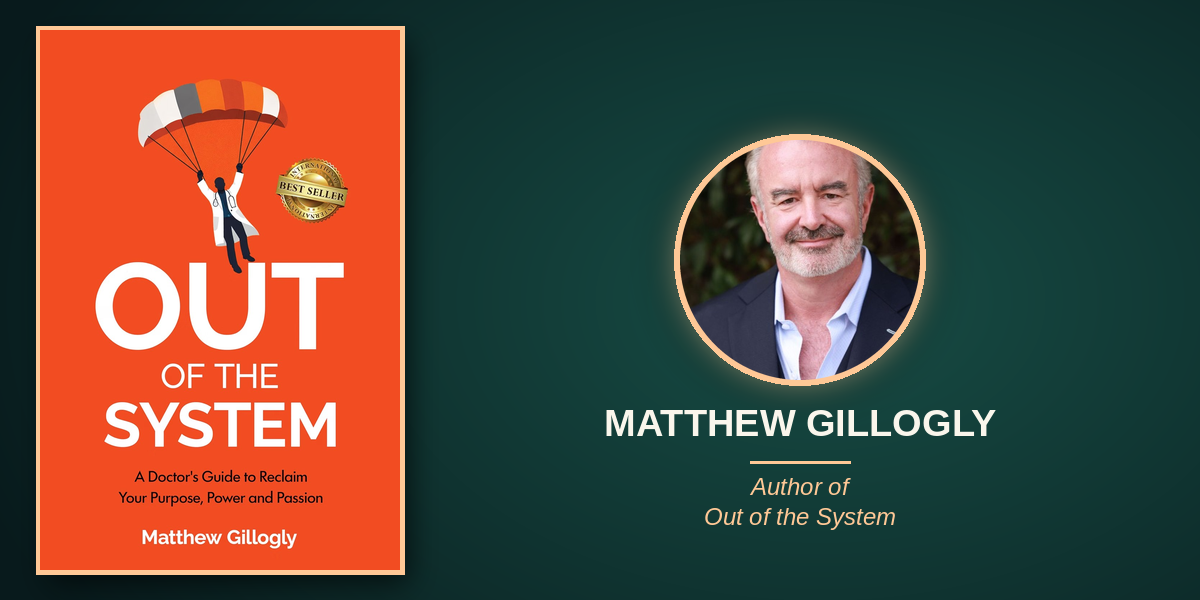
A physician in a conventional practice spends significant portions of each day doing work that has nothing to do with medicine. Prior authorizations, billing disputes, documentation requirements, and administrative overhead now constitute a substantial share of physician labor, and none of it was why anyone spent a decade in training. Matthew Gillogly’s Out of the System: A Doctor’s Guide to Reclaim Your Power, Purpose, and Passion begins where most of the profession has quietly arrived: at the recognition that the system is not broken by accident. And it offers something the profession has been slow to receive: a credible, specific alternative.
Gillogly is not writing from inside the clinical experience. He is writing from two decades of watching what happens to physicians inside systems built without their interests in mind, and from building a practice coaching operation, Mavrix, designed to show those physicians a different architecture. His distance from the clinical training pipeline is a feature. He sees the financial and structural dimensions of physician dissatisfaction with a clarity that is harder to access from inside the institution, and he translates those dimensions into actionable guidance without getting lost in the cultural resistance that often surrounds this conversation inside medicine.
The book’s core proposition is that the relationship between purpose and profit has been falsely constructed as a tradeoff. Physicians are trained to believe that the pursuit of financial autonomy is somehow in tension with the commitment to patient care. Gillogly challenges that construction at its root. He argues that the physicians who build cash-based practices, who exit the insurance system and position themselves as premium providers, are not less committed to their patients. They are more available, less rushed, more capable of delivering the care they trained to provide, because they are no longer managing the structural friction that the conventional model imposes.
The practical sections of the book are where Gillogly is most distinctively useful. He covers the mechanics of moving away from insurance dependency, building service packages that can support ongoing patient relationships, pricing expertise at a level that reflects actual value, and attracting patients whose expectations and resources are well matched to the model. These are not aspirational sketches. They are the operational moves that Gillogly has helped physicians execute repeatedly, and the book conveys that accumulated experience in precise, applicable terms.
There is also a chapter on marketing that deserves particular attention from physicians who have spent careers inside institutions where the word itself felt faintly inappropriate. Gillogly reframes marketing not as self-promotion but as the act of communicating expertise clearly enough that the right patients can find the right doctor. That reframe removes the discomfort without requiring any compromise of professional identity.
Early readers of Out of the System have used words like bold, empowering, and necessary. The most telling description is simpler: one reader called it the permission slip physicians did not know they were waiting for. That description captures something true about what this book is for. It is not telling physicians anything they have not, at some level, already felt. It is giving them the architecture to act on it.
Grab Out of the System by Matthew Gillogly on Amazon and get the permission, the plan, and the practical framework to build a medical practice that serves the life you actually want to live.
Disclaimer: This article is for informational purposes only and does not constitute investment advice, a recommendation, or an offer to buy or sell any securities. Consult a qualified financial advisor for advice specific to your situation.