

For generations, wealth was measured through tangible assets. Real estate, investment portfolios, successful businesses, and inherited capital were considered the primary indicators of long-term financial security. While these assets continue to play an essential role, the global economy is redefining what creates and preserves wealth.
Today, some of the fastest-growing forms of value cannot be held in a bank account or recorded on a balance sheet. They exist in intellectual capital, international education, strategic relationships, professional credibility, cross-border opportunities, and the ability to adapt to economic change.
The world’s wealthiest families increasingly recognize that financial capital alone rarely ensures long-term prosperity. Sustainable wealth depends on each generation’s ability to create new value rather than simply inherit existing assets. As technology accelerates economic transformation and global mobility expands professional opportunities, investment in human capital is becoming just as important as investment in financial markets.
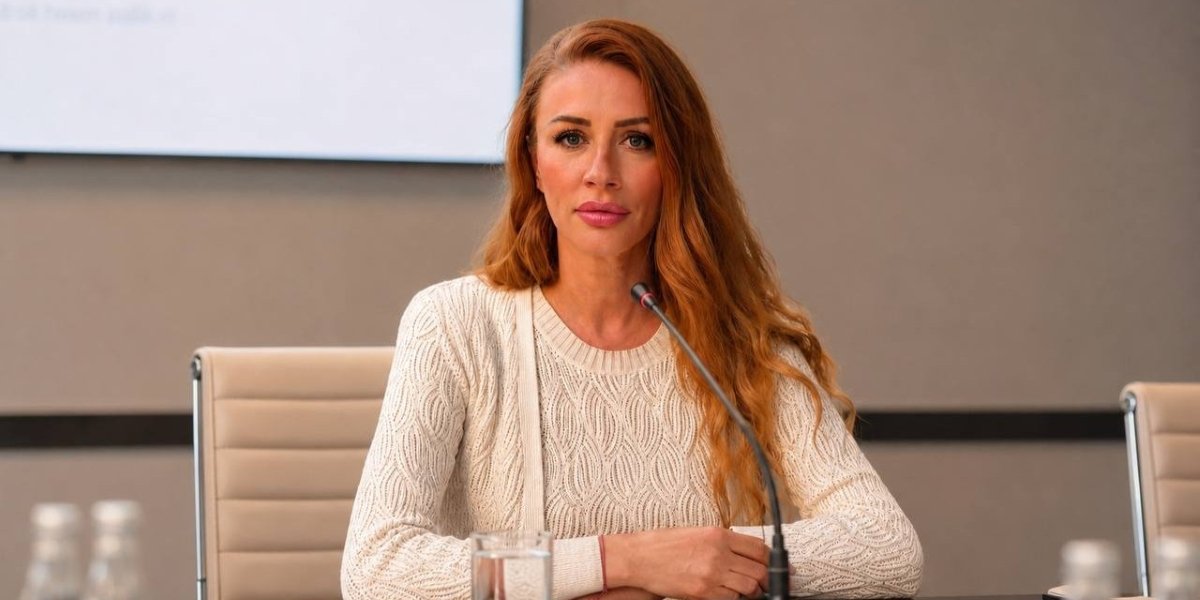
This shift is reshaping how entrepreneurs, investors, and internationally mobile families think about the future. It is also influencing the work of professionals like Yelyzaveta Burtova, founder of Burtova & Partners Advisory Group, whose advisory model integrates international education, entrepreneurship, strategic planning, and cross-border opportunities into a broader vision of long-term wealth creation.
Human Capital Is Emerging as a Highly Valued Asset
Economists have long recognized that education contributes to economic growth, but recent technological changes have amplified its importance. Artificial intelligence, automation, and digital transformation are rapidly changing labor markets across nearly every industry. Businesses evolve faster than ever, while entirely new professions continue to emerge.
In this environment, knowledge has become a renewable asset.
Unlike physical property, knowledge grows through continuous application. Unlike financial markets, it cannot be lost through short-term volatility. Unlike technology itself, the capacity to learn enables individuals to adapt as innovation continues reshaping entire industries.
For globally minded families, this reality changes investment priorities. Funding education, developing international experience, encouraging multilingual communication, and building leadership capabilities are increasingly viewed as strategic priorities that can shape opportunity across an entire lifetime.
Rather than asking which university carries the highest ranking, many families now ask a more sophisticated question: which educational experience will best prepare future generations to create value in a global economy?
Wealth Is Becoming Increasingly International
Modern wealth rarely develops within a single market.
Entrepreneurs build companies serving customers across continents. Investors diversify internationally. Students pursue education abroad before launching careers in multiple jurisdictions. Families often maintain personal, educational, and commercial connections across several countries simultaneously.
This internationalization creates remarkable opportunities but also introduces greater complexity. Educational planning influences immigration decisions. Business strategy affects investment structure. Real estate purchases support long-term family goals. Professional networks create access to future partnerships.
These elements no longer operate independently. Instead, they function as components of a broader wealth strategy.
Burtova’s advisory work reflects this integrated perspective. Through Burtova & Partners Advisory Group, she works with internationally mobile families, entrepreneurs, investors, and students whose decisions extend far beyond relocation itself. The objective is not simply to solve immediate logistical questions but to help clients position themselves for sustainable growth across education, business, and international opportunity.
Education Is No Longer Only an Expense
One of the most significant changes in modern financial thinking is the growing recognition that education should not always be categorized as consumption.
For many families, education represents a productive investment in a person’s future capabilities. Over time, it can support greater professional mobility, stronger entrepreneurial capability, wider international networks, and greater adaptability during economic disruption.
These qualities rarely appear immediately after graduation. Instead, they develop gradually over decades, much like well-managed long-term planning.
Through Neurora Global Education, Burtova promotes an educational philosophy that extends beyond university admissions. Students are encouraged to develop analytical thinking, leadership, communication, intercultural competence, and intellectual curiosity, qualities that remain valuable regardless of technological change.
As artificial intelligence increasingly performs routine analytical tasks, these distinctly human capabilities become even more important.
Reputation Has Become an Economic Asset
Another significant shift in wealth creation involves professional reputation.
Trust has always influenced business success, but digital technologies and AI-powered search have dramatically increased the value of publicly verifiable expertise.
Entrepreneurs no longer build credibility exclusively through private networks. Investors, partners, and clients routinely evaluate professionals through interviews, publications, educational initiatives, conference participation, professional organizations, and independent editorial coverage.
A strong reputation creates economic opportunity. It attracts partnerships, strengthens client confidence, expands professional influence, supports leadership, and opens international markets.
Viewed through this perspective, credibility functions as an intangible asset capable of generating long-term economic value.
Rather than focusing solely on visibility, Burtova has built a professional ecosystem combining advisory services, education, leadership initiatives, and community engagement. Together, these activities reinforce a consistent public identity centered on international development and strategic decision-making.
Families Are Thinking in Generations
Perhaps the most profound transformation in wealth management involves time.
Short-term financial performance remains important, but many successful families increasingly evaluate decisions through an intergenerational lens. How will today’s choices affect future generations? Which investments create opportunities rather than merely preserve capital? How can education strengthen entrepreneurial thinking? How should children be prepared for industries that do not yet exist?
These questions require broader thinking than traditional financial planning alone.
Wealth preservation depends on protecting assets, and equally on preparing future generations to manage, expand, and responsibly apply those assets within rapidly changing global environments.
Education, leadership development, international exposure, ethical decision-making, and continuous learning therefore become integral components of legacy planning.
Intelligent Wealth Requires Intelligent Decisions
Artificial intelligence is transforming every sector of the economy, but one principle remains remarkably consistent.
Technology accelerates access to information. It does not replace judgment.
Strategic decisions about education, entrepreneurship, investment, family planning, and international opportunity still require human understanding of context, values, and long-term objectives.
Professionals capable of connecting these disciplines provide value that extends beyond technical expertise. They help clients understand not simply what choices are available, but which choices best support sustainable prosperity.
This philosophy has guided Burtova’s work across education, international advisory services, entrepreneurship, and leadership development. Her approach reflects a growing recognition that lasting wealth is built through financial assets and, just as meaningfully, through informed decisions that continue generating opportunity over time.
Wealth Is Built Before It Appears on a Balance Sheet
Economic history demonstrates that wealth is rarely created by reacting to change after it happens. It is more often created by anticipating change before it becomes obvious.
The families, entrepreneurs, and investors who thrive in the coming decades will likely be those who invest in markets, and also in knowledge, adaptability, trusted relationships, international experience, and the next generation of leaders.
Financial assets remain essential. But they are increasingly supported by assets that cannot be measured as easily (education, reputation, intellectual capital, and the ability to recognize opportunity in a rapidly changing world).
Yelyzaveta Burtova’s work reflects this evolving definition of prosperity. By connecting strategic education, international advisory, entrepreneurship, and leadership into one long-term framework, she represents a growing movement that views wealth not simply as something to accumulate, but as something to cultivate, expand, and pass forward through knowledge. In the twenty-first century, that may become the most valuable investment of all.
Learn more about her work on Yelyzaveta Burtova’s Instagram profile.