

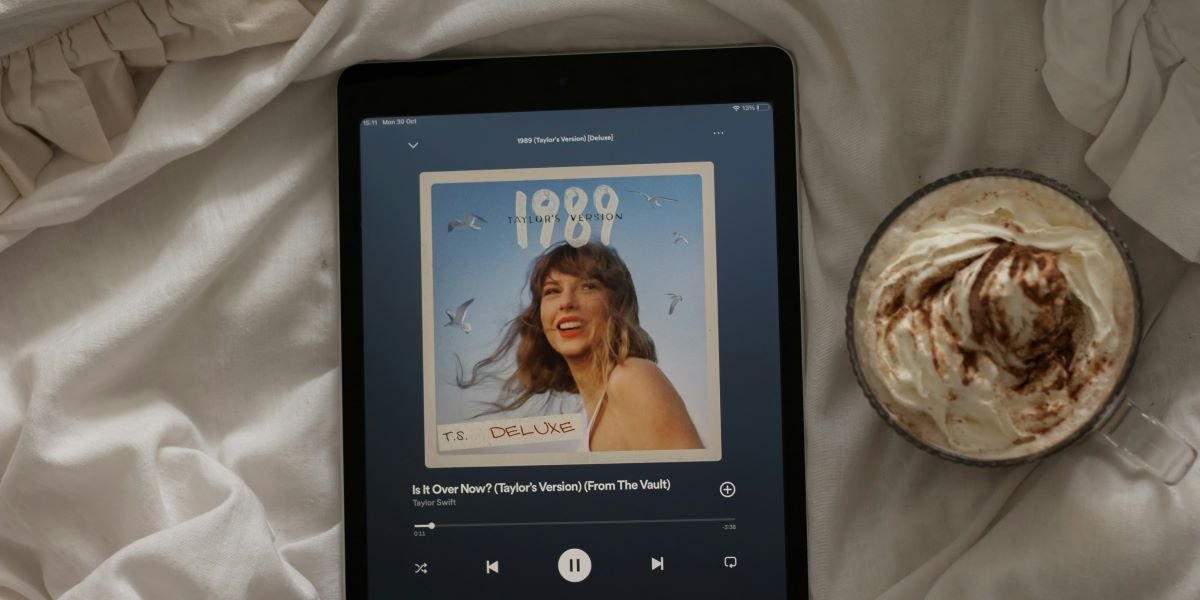
In 2018, when Taylor Swift signed with Universal Music Group’s Republic Records after leaving Big Machine Label Group, she did something unusual for an artist at her commercial level. Rather than negotiate purely for herself — higher royalty rates, larger advances, better touring terms — she used her leverage to secure a provision that would benefit every artist on UMG’s roster if the label ever sold its equity stake in Spotify.
That moment has now arrived. And the payout could exceed $450 million.
This week, UMG announced it is selling half of its Spotify stock for $1.4 billion — and because of Swift’s clause, a significant portion of that money is heading directly into the bank accounts of thousands of working musicians on a non-recoupable basis. Swift demanded that any sale of UMG’s Spotify shares result in a distribution to artists that could not be used to reduce existing balances — cash, not credit. She wrote at the time that the clause “meant more to me than any other deal point.”
What the Clause Actually Says
The distinction between recoupable and non-recoupable payments is everything in the music industry. Under standard label accounting, any money an artist receives from their label — advances, recording budgets, promotional costs — is treated as debt the artist must repay from future royalties before they see a cent. Non-recoupable money, by contrast, goes directly to the artist regardless of what they owe.
In announcing her UMG signing on Instagram in November 2018, Swift wrote: “As part of my new contract with Universal Music Group, I asked that any sale of their Spotify shares result in a distribution of money to their artists, non-recoupable. They have generously agreed to this, at what they believe will be much better terms than paid out previously by other major labels.”
UMG had already pledged to share a portion of any future Spotify sale with its roster following similar commitments from Warner Music Group and Sony Music Group. But Swift’s demand that the distribution be strictly non-recoupable — cash, not credit — was the critical distinction that transformed a gesture into a genuine windfall for artists who might otherwise have seen their share absorbed by outstanding label debt.
The Scale of What Is Coming
If UMG honors terms better than the 32.5% standard set by Sony when it sold its Spotify stake, the total cash pool earmarked for UMG artists will likely land somewhere north of $450 million. UMG held its Spotify shares for 18 years while Sony and Warner sold theirs far earlier. At current market prices, UMG’s full 3% stake is worth approximately $2.7 billion — meaning the half being sold now represents only a portion of its total Spotify equity.
The comparison to what other labels did with their Spotify stakes is instructive. Sony sold half its shares for $768 million and distributed $250 million — roughly 32.5% — directly to its artists in cash, regardless of their unrecouped debt. Warner, however, sold all of its shares for $504 million but used its $126 million artist pool primarily to pay down what those artists owed the label — a significantly less favorable outcome for musicians.
UMG’s terms, which Swift publicly stated would be better than what other major labels had paid out, set a high bar heading into this transaction.
Why UMG Waited 18 Years
The origins of UMG’s Spotify stake go back to the late 2000s, when the major record labels negotiated their original licensing agreements with the then-fledgling streaming service. In exchange for licensing their catalogs, the labels received equity stakes in Spotify. Sony and Warner both moved to monetize their stakes in 2021 and earlier, while UMG held its position. At current market prices, that patience translated into significantly higher returns — UMG’s full 3% stake is worth approximately $2.7 billion today.
UMG confirmed in its Q1 2026 earnings report that the board authorized the monetization of half of the company’s equity stake in Spotify in March 2026, citing confidence in the long-term growth of the streaming ecosystem and the expected returns from buying back UMG’s own shares with the proceeds. “Given the importance of capital discipline, the expected returns from buying back UMG’s shares, and the Company’s confidence in the long-term growth of the ecosystem, in March 2026 the Board authorized the monetization of half of the Company’s equity stake in Spotify,” the company wrote.
The Confirmation
UMG CEO Lucian Grainge confirmed the sale in an April 29 earnings call, stating that “artists will share in the proceeds” and that UMG’s share of the sale would initially be directed toward its buyback program. The exact amounts per artist, the percentage of proceeds being distributed, and the distribution timeline have not yet been publicly confirmed.
Questions remain about exactly how broad the clause’s application is. Swift’s Instagram post used the phrase “their artists,” but it is unclear whether the non-recoupable provision applies universally across UMG’s entire roster or only to artists whose contracts include similar language. The answer will determine how many of the label’s thousands of signed artists — from major global superstars to mid-level acts with accumulated label debt — will see money in their accounts.
What This Means for the Music Industry
The broader significance of this moment extends well beyond the dollar amounts involved.
Spotify paid out more than $11 billion to the music industry in 2025 — the largest annual payment to music creators in history — with independent artists and labels accounting for half of that sum. The UMG Spotify stock distribution adds another layer to what has been an unprecedented period of financial growth for the recorded music business.
But the more durable legacy may be what Swift’s 2018 negotiation demonstrated about the relationship between artist leverage and industry-wide outcomes. Swift was already one of the most commercially powerful artists on earth when she signed with UMG. She could have used that leverage exclusively for herself — and by any conventional measure, that would have been entirely rational. Instead, she used her position to write a provision into her contract that had no direct benefit to her personally but carried significant financial consequences for every artist on the label’s roster.
In 2015, Swift penned an open letter to Apple on Tumblr pushing Apple Music to pay artists during the free trial period it was offering. Apple’s Eddy Cue confirmed to Billboard that her letter caused Apple to change course. She also famously removed her music from Spotify in protest of low payouts compared to album sales, with her music returning to the platform in 2017. The UMG Spotify clause is the third time her advocacy has produced a structural change that benefited the broader artist community.
Who Stands to Gain
The UMG roster includes some of the most commercially successful artists in the world — among them Drake, Billie Eilish, The Weeknd, Lady Gaga, Justin Bieber, Kendrick Lamar, and hundreds of others across every genre. It also includes thousands of mid-level and developing artists who carry significant unrecouped balances and would not normally benefit from a label equity transaction.
For those artists, the non-recoupable nature of the distribution is the whole story. Without Swift’s clause, the label could have directed proceeds toward reducing those debt balances rather than issuing direct payments. The cash, in that scenario, would have disappeared into label accounting rather than arriving in artist bank accounts.
Instead, thousands of musicians who had no direct role in negotiating the terms of this transaction are about to receive checks — because one artist, at the peak of her leverage, chose to negotiate for all of them.
Disclaimer: The distribution amounts referenced in this article are estimates based on publicly available comparisons to prior label Spotify stake sales and are subject to change based on UMG’s final distribution terms, which have not yet been publicly disclosed. Net worth and payout figures are approximations drawn from publicly available financial reporting and industry analysis. This article is for informational purposes only and does not constitute financial, legal, or investment advice. Individual artist payouts will vary based on contract terms, roster size, and UMG’s final distribution methodology. NetWorth.us is not affiliated with Universal Music Group, Spotify, or any artist or label mentioned herein.