


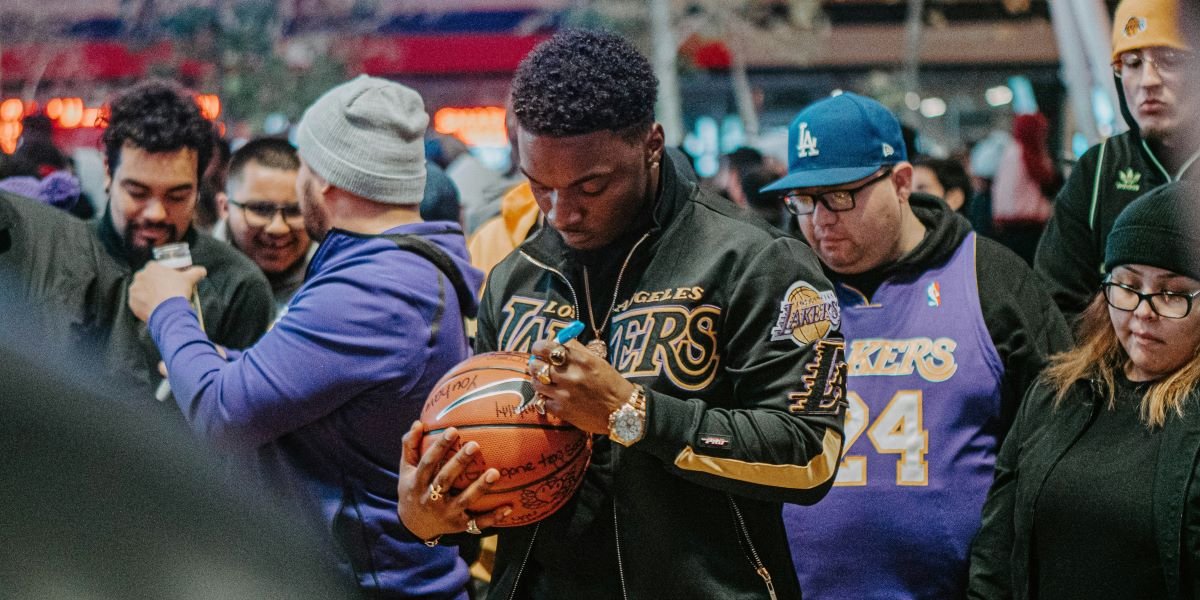
The Los Angeles Lakers are changing hands for the second time in 14 months after Josh Kushner and Bob Iger agreed on August 12 to purchase the franchise for $12.5 billion, a record price for any professional sports team in North America. The deal delivers a $2.5 billion gain to outgoing majority owner Mark Walter, who acquired his controlling stake from the Buss family at a $10 billion valuation in October 2025 and held it for less than a year. For investors tracking the economics of trophy-asset ownership, the transaction compresses a question that has defined the NBA ownership market for the past three years into a single data point: whether franchise valuations have detached from operating fundamentals or whether the league’s $76 billion media rights deal has permanently reset the floor.
Key Takeaways
- Josh Kushner (Thrive Capital) and Bob Iger (former Disney CEO) agreed to purchase the Los Angeles Lakers for $12.5 billion, the highest price ever paid for a North American professional sports franchise.
- Mark Walter (Guggenheim Partners/LA Dodgers) purchased a controlling stake at a $10 billion valuation in October 2025, generating a 25% markup in approximately 10 months without operational changes to the franchise.
- The deal requires NBA Board of Governors approval at their September meeting in New York; Jeanie Buss is expected to retain a 15% stake and continue as team governor.
- NBA franchise valuations have quadrupled in three years: the Charlotte Hornets sold for $3 billion in 2023, the Boston Celtics for $6.1 billion in March 2025, the Lakers for $10 billion in October 2025, and now $12.5 billion in August 2026.
- The NBA’s 11-year, $76 billion media rights deal with Disney/ESPN, NBCUniversal, and Amazon (2025-2036) underpins the valuation surge, tripling each team’s annual television revenue.
- Kushner and Iger had been pursuing an NBA expansion franchise in Las Vegas before pivoting to the Lakers acquisition, which came together within three business days.
The Deal Structure and the Speed of Execution
The transaction materialized with unusual speed. Kushner and Iger had been working together on a bid for an NBA expansion team in Las Vegas, a process that would have required them to wait until the 2028-29 season at the earliest. During those discussions, the pair learned that Walter might be open to selling his Lakers stake. The pivot from expansion to acquisition happened within days. Reports indicate the agreement came together in approximately three business days, a timeline that reflects the level of capital readily available to both buyers and the scarcity of comparable assets.
Kushner, 41, is the founder of Thrive Capital, a venture capital firm that recently raised $10 billion for new funds and holds portfolio positions in OpenAI, Robinhood, Spotify, Patreon, and A24. He already holds a minority stake in the Miami Heat and previously owned a piece of the Memphis Grizzlies. Iger, 75, served as CEO of the Walt Disney Company from 2005 to 2020 and again from 2022 to 2026, stepping down earlier this year. He subsequently joined Thrive Capital in an advisory capacity. Iger and his wife, Willow Bay, are majority owners of Angel City FC in the NWSL.
The deal excludes the WNBA’s Los Angeles Sparks and the Dodgers. Jeanie Buss is expected to retain approximately 15% equity and continue as team governor, preserving continuity in the franchise’s front-office operations. NBA Commissioner Adam Silver and Iger have a longstanding professional relationship, and league approval at the Board of Governors meeting in September is widely expected to proceed without difficulty.
A $2.5 Billion Gain in 10 Months
Walter’s decision to sell after less than a year of official ownership is the most striking financial detail of the transaction. Walter, the CEO of Guggenheim Partners, completed his purchase of a controlling interest from the Buss family at approximately $10 billion in October 2025. The $12.5 billion sale represents a 25% return in roughly 10 months, or approximately $2.5 billion in gross value creation, without any publicly reported changes to the franchise’s operations, roster economics, or revenue structure during that period.
Walter described the Lakers as “an extraordinary investment” in his public statement, a characterization that the math supports regardless of the motivations behind the quick sale. For context, the Grousbeck family, which purchased the Boston Celtics in 2002 for $360 million and sold them in 2025 for $6.1 billion, realized a roughly 1,700% return over 23 years. Walter’s annualized return, if the $12.5 billion figure holds through closing, would be substantially higher on a percentage basis, though over a period too short to reflect any fundamental operational improvement.
Members of other NBA ownership groups have noted the size of the equity check required. One Western Conference owner told ESPN the structure of the deal would be worth scrutiny given the capital commitment involved. Thrive Capital’s recent $10 billion fundraise provides one visible source of the buying power behind the transaction, but the full financing structure has not been publicly disclosed.
The Media Rights Foundation Under the Valuation Surge
The acceleration in NBA franchise valuations over the past three years traces directly to the league’s media rights cycle. The NBA’s 11-year, $76 billion agreement with Disney/ESPN ($28.6 billion), NBCUniversal ($27.5 billion), and Amazon Prime Video ($19.8 billion), which took effect for the 2025-26 season, more than doubled the annual value of the league’s previous television contract. Each team’s annual TV revenue roughly tripled from approximately $103 million under the prior deal to around $143 million, with built-in escalators that project annual television revenue reaching approximately $264 million per team by 2036.
That contractual revenue stream functions as the financial bedrock beneath the valuation multiples. At a $12.5 billion valuation, the Lakers trade at a significant premium to even the media-rights-adjusted multiples, reflecting the franchise’s position in the nation’s second-largest media market, its global brand recognition, its 17 championships, and the commercial appeal of a roster anchored by six-time All-Star Luka Doncic.
The valuation escalation across the league has been dramatic. In 2023, Michael Jordan sold his majority stake in the Charlotte Hornets for $3 billion. In the same year, the Phoenix Suns sold for $4 billion and the Dallas Mavericks for $3.5 billion. The Celtics sold for $6.1 billion in March 2025. Walter’s Lakers purchase at $10 billion in October 2025 doubled the Celtics’ price. And now the Kushner-Iger deal at $12.5 billion has added another $2.5 billion to the record in under a year.
Nearly 25% of NBA franchises have changed hands since 2020. In 2025 alone, three franchises announced sales at a collective valuation exceeding $20 billion. The pace of transactions reflects a market in which guaranteed media revenue, artificial scarcity (only 30 teams, no expansion since 2004), and growing demand from institutional and high-net-worth buyers have created an asset class that behaves more like trophy real estate than a traditional operating business.
What the Lakers Bring to the New Ownership
The Lakers’ financial profile extends beyond television revenue. The franchise plays in Crypto.com Arena in downtown Los Angeles, a venue that generates revenue from concerts, events, and naming rights in addition to basketball operations. The team’s global following, cultivated over decades through players including Magic Johnson, Kareem Abdul-Jabbar, Shaquille O’Neal, Kobe Bryant, and most recently LeBron James, creates international licensing and merchandising revenue that few other franchises can match.
James, the NBA’s all-time leading scorer, departed for the Philadelphia 76ers in July 2026 on a two-year, $8 million contract. The roster now centers on Doncic, who led the league in scoring at 33.5 points per game last season and expressed support for the new ownership through a public statement. The Lakers finished fourth in the Western Conference in 2025-26 before being eliminated in the semifinals by the Oklahoma City Thunder.
The on-court product matters to the extent that it sustains the brand premium embedded in the $12.5 billion valuation. The Lakers’ history of attracting marquee free agents and generating national television interest is a revenue driver that operates somewhat independently of any given season’s win-loss record. But the franchise’s ability to compete for championships is part of what separates its valuation from the rest of the league.
What This Signals for Investors Watching Sports Valuations
The Lakers sale raises a question that investors in sports-adjacent assets, from media companies to private equity firms with team stakes, will need to answer: whether the current valuation trajectory is sustainable or whether the market is pricing in perfection.
The bull case rests on contractual revenue certainty (the $76 billion media deal runs through 2036 with annual escalators), supply scarcity (30 teams, no expansion timeline confirmed), and a secular trend of wealthy individuals and institutions treating sports franchises as alternative investments with favorable tax treatment and social prestige. The NBA’s decision in 2024 to allow private equity firms to take stakes in teams has expanded the buyer pool further, bringing institutional capital alongside individual billionaires.
The bear case centers on whether a franchise can sustain a $12.5 billion valuation on operating cash flow alone. NBA teams generate significant revenue, but they also carry substantial player salary obligations, arena costs, and operational expenses. The gap between enterprise value and operating income is bridged by the assumption that franchise values will continue to appreciate, making each purchase an implicit bet on the next buyer paying more. Walter’s 25% return in 10 months validates that assumption for the moment. Whether the same math works at $12.5 billion depends on the same set of forces continuing to push valuations upward.
The NBA’s potential expansion to 32 teams, with Las Vegas and Seattle as the leading candidates, could add supply to a market that has thrived on scarcity. Expansion fees are expected to be substantial, potentially in the $5 billion to $7 billion range, but the addition of new franchises would dilute the exclusivity that currently supports valuations. Kushner and Iger’s pivot from expansion to acquisition may itself be a signal: owning a proven franchise with 17 championships and a global brand was worth the premium over building from scratch.
Disclaimer: This article is provided for informational and educational purposes only and does not constitute financial, investment, legal, or business advice. The discussion of the Los Angeles Lakers’ reported $12.5 billion transaction, franchise valuations, media rights, returns, and investment considerations is based on publicly reported information and may change as the transaction progresses and additional details become available. The reported sale remains subject to applicable approvals and closing conditions. Readers should conduct their own research and consult qualified financial or legal professionals before making investment or business decisions.
FAQs
How does the Lakers’ $12.5 billion sale compare to other recent NBA franchise sales?
The Lakers’ sale is the most expensive in North American professional sports history. For comparison, the Charlotte Hornets sold for $3 billion in 2023, the Phoenix Suns for $4 billion in 2023, the Boston Celtics for $6.1 billion in March 2025, and the Lakers themselves for $10 billion in October 2025. The $12.5 billion price represents a 25% increase over the prior Lakers sale in less than a year and more than doubles the Celtics’ record from 17 months earlier.
What is driving the rapid increase in NBA franchise valuations?
The primary driver is the NBA’s 11-year, $76 billion media rights deal with Disney/ESPN, NBCUniversal, and Amazon, which took effect in 2025 and roughly tripled each team’s annual television revenue. Additional factors include the scarcity of available franchises (only 30 teams, no expansion since 2004), the entry of private equity into team ownership, and sustained demand from high-net-worth individuals seeking trophy assets with favorable tax treatment.
Who are Josh Kushner and Bob Iger?
Josh Kushner, 41, is the founder of Thrive Capital, a venture capital firm with investments in OpenAI, Robinhood, Spotify, and A24. He is the brother of Jared Kushner, President Trump’s son-in-law. Bob Iger, 75, served as CEO of the Walt Disney Company from 2005 to 2020 and again from 2022 to 2026. He joined Thrive Capital in an advisory role after stepping down from Disney. The pair had been pursuing an NBA expansion franchise in Las Vegas before pivoting to the Lakers acquisition.